Showing posts with label Victorian Literature Challenge. Show all posts

A Victorian Celebration Giveaway!

Thursday, June 7, 2012


Giveaway Closed: Kerry @ Entomology of a Bookworm is the winner!

Last year I participated in a Victorian Literature Challenge and read 15 books that fall into that category. I developed a huge appreciation for the genre* and realized how much I enjoy it. I also discovered a few new authors whose work I’m looking forward to exploring.

So when Allie at A Literary Odyssey decided to host a Victorian Celebration this summer I couldn’t resist. To join in the fun I’m giving away three Victorian novels that I love: Jude the Obscure, Jane Eyre and Great Expectations. All three are wonderful in their own ways and if you haven’t read them yet, this is the perfect opportunity.
 
For a chance to win all three books (seen above) leave a comment with your email address and your favorite Victorian novel. This giveaway is open to US residents only, sorry guys!
 

For my own reading choices for the Celebration I decided to definitely read Villette by Charlotte Bronte (1853) and The Return of the Native by Thomas Hardy (1878). I’m also going to try and fit in a couple more from the following list:

- The Sign of the Four by Sir Arthur Conan Doyle (1890)
- Moonstone by Wilkie Collins (1868) 
- The Warden by Anthony Trollope (1855) 

- The Count of Monte Cristo by Alexandre Dumas (1844) 
- Vanity Fair by William Makepeace Thackeray (1848)

If you’re looking for other ideas of Victorian books to read, here are the books I finished for last year’s Challenge.
1) Jude the Obscure by Thomas Hardy (1895)

2) The Hound of the Baskervilles by Sir Arthur Conan Doyle (1902)

3) Middlemarch by George Eliot (1874)
4) David Copperfield by Charles Dickens (1850) 

5) The Portrait of a Lady by Henry James (1881)
 
6) The House of Mirth by Edith Wharton (1905) 

7) The Invisible Man by H.G. Wells (1897)
 
8) Heidi by Johanna Spyri (1880) 
9) Kim by Rudyard Kipling (1901) 
10) King Solomon's Mines by H. Rider Haggard (1885) 
11) Twenty Thousand Leagues Under the Sea by Jules Verne (1869)

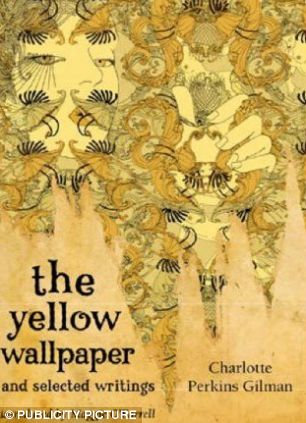
12) The Yellow Wallpaper by Charlotte Perkins Gilman (1892)

13) War and Peace by Leo Tolstoy (1869) 

14) A Study in Scarlet by Sir Arthur Conan Doyle (1887)

15) Narrative of the Life of Frederick Douglass by Frederick Douglass (1845)

* The Victorian era is usually defined as the lifespan of Queen Victoria, who reigned from 1837-1901. Books published during these particular years and authors who lived during this time usually fall in the “Victorian” category.

Top Ten Victorian Novels

Tuesday, March 13, 2012


This week's Top Ten from The Broke and the Bookish asks for my Top Ten books in the genre of my choice. I decided to do Victorian novels, because to complete the Victorian Literature Challenge last year I read 15 books from that period and I have a few others I already loved.

The Victorian era is usually defined as the lifespan of Queen Victoria, who reigned from 1837-1901. Books published during these particular years and authors who lived during this time usually fall in the “Victorian” category. I’ll also add that there are still many Victorian novels that I haven’t read yet, so if you don’t see your favorite here, tell me I should read it soon!

1) David Copperfield by Charles Dickens (1850)

2) Jane Eyre by Charlotte Bronte (1847)

3) The Picture of Dorian Gray by Oscar Wilde (1890)

4) Middlemarch by George Eliot (1874)

5) Jude the Obscure by Thomas Hardy (1895)

6) Strange Case of Dr. Jekyll and Mr. Hyde by Robert Louis Stevenson (1886)

7) The Adventures of Sherlock Holmes by Sir Arthur Conan Doyle (1892)

8) The Portrait of a Lady by Henry James (1881)

9) The Woman in White by Wilkie Collins (1859)

10) Cranford by Elizabeth Gaskell (1851)

Image form here.

A Study in Scarlet

Tuesday, December 13, 2011


A Study in Scarlet
by Sir Arthur Conan Doyle
★★★★

Years ago I was on a Sherlock Holmes kick and I think I might have read this, but it's been so long I just wasn’t sure. The cases all sort of jumble together in my head, so it was time to read it again.

This is the very first Sherlock Holmes adventure. Watson, a doctor who served in India and Afghanistan, is in need of a roommate. A mutual friend introduces him to Holmes and soon they are renting a flat on Baker Street and the fun begins. Sherlock is called in to consult on a murder and takes Watson with him. Soon the clues are piling up and Sherlock’s keen eye is catching things that every other detective seems to miss.

The book is written from Watson’s point-of-view and I love the descriptions he gives of Sherlock. He's surprised by how much he knows, but also by how little he knows on certain subjects (like literature and astronomy). Sherlock explains that he can't clutter up his mind with hundreds of details; instead he must fill it only with that which he believes will be useful to him. I also thought it was interesting that even early-on Watson that Sherlock might be addicted to a narcotic (in later books we learn he smokes opium).

Watson also notes that Sherlock's method of deduction reminds him of Edgar Allen Poe's fictional detective, Dupin. To which Sherlock, in his classic condescending style, says he thinks Dupin was a very inferior fellow.


The book takes a really strange turn in the second half. The first half follows Sherlock and Watson as they try to solve the mystery. At the end of part one Sherlock catches the killer, but then part two starts and we are in Utah years earlier. The story introduces brand new characters, including crazy Mormons who kidnap women settlers and force them into marriage. It’s an odd way to plot the story. It all makes sense in the end, but it took me a minute to figure out what was going on.

I would say this isn’t my favorite of the Sherlock books. That’s mainly because of the huge section in Part 2 that he is completely absent from. I still really enjoyed it, but that part just threw me for a loop.

I loved reading this after seeing the BBC version of Sherlock, which begins with the episode "A Study in Pink." The showed stayed remarkably close to the original story (minus the Mormons), mainly changing the time period and a few case details. If you haven’t already watched that series (seen above) you should! It's so good.


p.s. This was my 15th and final book for the Victorian Literature Challenge hosted by Subtle Melodrama. I reached the top level, Desperate Remedies, yay!

Bottom image from here.

The House of Mirth

Friday, December 2, 2011


The House of Mirth
by Edith Wharton
★★★★★

This turn-of-the-century novel tells the story of Lily Bart, a beautiful woman caught between what her heart wants and she thinks she should want. When Lily is orphaned as a young woman, an aunt provides for her, leaving her cared for, but never wealthy. At age 29, Lily is still hoping to marry well, despite her financial problems. Yet every time she seems close to making a match, something causes her to withdraw a bit from her pursuit.

I’ve read Wharton’s The Age of Innocence and Ethan Frome and with each books I was impressed with the writing and restrained portrayals of the characters, but never more so than with this book. For me, The House of Mirth made me love Wharton, instead of just appreciating her.

Wharton finds the most eloquent way to say things, but still manages to keep it simple and not overly-flowery. It’s not like Dickens, who I do love in a different way, but the man was wordy! She’s not writing to fit more words in each paragraph, instead it feels like things have been pared down until what’s left is only what is necessary to tell the compelling story.

I read it slowly, savoring each line instead of barreling ahead. I didn’t want to miss anything and I found myself highlighting so many lines that I connected to. It felt like she had chosen each word so carefully and so in turn I wanted to make sure I gave each word its due as I read it.

Lily Bart is a character so caught up in trying to attain what society tells her is the perfect life, that she completely denies her true feelings. She ignores what makes her happy and focuses all of her intelligence and planning into finding a wealthy husband of the right social standing. At a young age, her mother taught her that this was what was important in life and Lily never quite let go of that mindset.

Lily has been raised to believe she needs a life of riches to be happy, but when she’s put in a position where those things might not be available to her anymore she doesn’t know what to do. She’s desperate and believes that her only choice is to sacrifice the life she thinks she loves or her happiness. It’s Madame Bovary without the selfish abandon in decision making.

This is the quote that sums it all up for me…
“…sometimes I think it’s because, at heart, she despises the things she’s trying for. And it’s the difficulty of deciding that makes her such an interesting study.” –Mrs. Fisher

The scenes between Lily and her friend Seldon are electric. They are sprinkled throughout the book and so each time you stumble upon one it breathes new life into the story, just as it does in Lily’s own life. Their chemistry radiates off the page. There are so many men who want Lily and yet Seldon is the only one that makes her feel alive. She refuses to acknowledge even to herself, that she feels anything for him.

“She knew herself by heart too, and was sick of the old story. There were moments when she longed blindly for anything different, anything strange, remote and untried; but the utmost reach of her imagination did not go beyond picturing her usual life in a new setting.”

The few moments when she is truly happy are tucked away in her memory. She never allows herself to dwell on those moments of joy. Instead she focuses on whatever problem is at hand, financial or social. She believes her problems don’t exist if she escapes to another setting, so she’s constantly trying to run away from them. The transition that she goes through from the beginning of the novel to the end is startling. She’s so carefree and hopefully at the start. Her playful nature begins to drain away as her circumstances become direr.

I loved the fact that despite having no idea how to achieve happiness in her life, she’s not helpless. She plans and schemes, often at her own expense, to solve her problems. She doesn’t wait around for someone to fix everything. She doesn’t make excuses for herself or allow herself to wallow in self-pity. She accepts the consequences of her actions, even if they sometimes seem unfair and I respect that. She’s proactive in her life and when she runs out of options, she’s willing to do whatever it takes to survive.

I loved the character of Lily and the story grew on me as I read it. By the end I didn’t want to put it down and I know I’ll be returning to it in the future.

“What Lily craved was the darkness made by enfolding arms, the silence which is not solitude, but compassion holding its breath.”

“It had always seemed to Seldon that experience offered a great deal besides the sentimental adventure, yet he could vividly conceive of a love which should broaden and deepen till it became the central fact of life.”

Middlemarch

Monday, November 21, 2011


Middlemarch
by George Eliot
★★★★☆

The small, fictional town of Middlemarch is a tight-knit community filled with people who are kind, pious, romantic or devious. In other words, it’s just like any other small town. Everyone has their own secrets and money problems and everyone knows everyone else’s business. The book looks closely at marriage, especially between two people who are not well-suited.

Now for the meat of the story, spoilers and all...

The main focus of the book is on three separate couples in Middlemarch, but unlike many books, the majority of the story happens after they’re married instead of during the courtship.

First, there’s Dorothea, a young idealistic woman and Edward Casaubon, the scholarly older man she marries. She believes he will do great things and wants to be his helpmate in that process. Unfortunately, he’s not the great man she hoped he would be and she quickly finds herself in a lonely marriage. Then she meets his cousin, Will Ladislaw, and feels an instant connection.

Then there’s the town’s doctor, Tertius Lydgate, who’s bursting at the seams with new ideas for the hospital and experiments to improve the healthcare offered. He falls for the sweet face of Rosamond Vincy and before he knows it, he’s married and she’s spending money faster than he can make it. Rosamond may be beautiful, but she’s also selfish and conniving, always looking for the next angle that will benefit her.

The final couple, Mary Garth and Fred Vincy, tends to be everyone’s favorite. Fred is immature and constantly gets himself into financial troubles. Mary loves him, but refuses to marry him until he gets his life together and finds an occupation that he loves. I loved that Mary wasn’t willing to settle and her decision helped build a happier life for both of them.

The three very different couples show a wide view of marriage. They offer both cautionary tales and sweet love stories. They remind us that you don’t always fall in love with the person you should and that sometimes people aren’t who they seem to be on the surface.

I love classics, but to be honest it usually takes me a little bit it get into them. Once I adjust to the language and get to know the characters, then I’m good to go. This one was completely different. From the first chapter I felt like knew Dorothea Brooks. I didn’t agree with all of her choices or connect to her on every level, but I felt like I “got” her. Her noble aspirations and idealistic nature act as both main strength and weakness. I was rooting for her from the beginning and the final scene between her and Will is one of my absolute favorites.

Sometimes, I felt so involved in Dorthea’s story that it was hard to switch gears and hear about the other people in Middlemarch, like Bulstrode of Dorothea’s sister Celia and her husband, Sir James.

Parts of the story are slow. It’s hard to avoid that when you have 800 pages of provincial life. But I really loved the intricacies of the characters’ lives. Nothing is laid our in black or white. Each character does both good things and bad things, sometimes for the right reasons and sometimes not. Everyone has flaws and makes mistakes. Even our two idealistic heroes (Dorothea and Lydgate) make horrible choices when they pick their spouses. Those flaws make the characters feel very real and relatable, which is what made the book work for me.

So, dig in and be willing to stick with the story, even if it gets slow, and you’ll be rewarded. The story is worth it, but don’t expect quick, constant drama.

“…and had been inclined to regard of himself as a general favorite. We are all apt to do so when we think of our own amiability more than of what other people are likely to want of us.” Middlemarch

“For Rosamond’s discontent in her marriage was due to the conditions of marriage itself; to its demand for self-suppression and tolerance and not the nature of her husband.”

Other reviews…

A Thousand Books with Quotes: “I was astounded as to how much this classic, which explores the many facets of marriages in the provincial town of Middlemarch amazingly parallels the different marriages that still exist today…”

It’s All About Books: “I loved the crazy parts, and suffered through the boring ones.”

ProSe: “At first blush one has this sense of simply being immersed in a rather quiet and pastoral story, but there's really very much more going on here as one turns the pages. …it is the story of human beings, and what it means to be human.”

Kim

Thursday, September 29, 2011


Kim
by Rudyard Kipling
★☆

You know those books that you know from the very first page, you’re going to love it… this wasn’t that. You know those other books that start out slow and it takes you awhile, but soon you find yourself hooked? Nope, this was not one of those either.

In fact, I made it through the entire book without every really feeling invested in any way, shape or form. I persevered only because I started it a few months ago and gave it up, then restarted it, convinced I’d get through it. It’s one of Kipling’s most lauded books and it’s on a million must read lists and there’s got to be something else there. But in the end it just didn’t work for me.

A young Irish boy, Kim, is orphaned in India during the 19th century. He becomes a disciple of a Tibetan Lama, Teshoo Lama, and travels with him on his quest. Eventually a British regiment takes him under their wing and enrolls him in an English school. They decide to groom him to become a spy.

I loved some of Kipling’s short stories (The Jungle Book, etc.), but this one left me feeling cold. It’s suppose to be a “spy” novel in some way, but instead of having any solid plot it meanders and muses about life. It felt both boring and tiresome and I couldn't help but wonder why we were suppose to care about what happened to Kim.

I know I should have more to say about this book, but honestly, I was just glad to be done with it. If anyone loved this book I would be thrilled to hear why.

I read this for the Victorian Literature Challenge.

The Hound of the Baskervilles

Friday, August 26, 2011


The Hound of the Baskervilles
by Sir Arthur Conan Doyle
★★★★★

I’ve always been a huge fan of Sherlock Holmes stories. They never fail to make me think and usually laugh. I’ve read collections, individual mysteries and I’ve even seen a play version that combines a couple tales. I was pretty sure I read this one in junior high, but I wasn’t positive, so I knew it was time to remedy that.

The Hound of the Baskerville is everything you want in Sherlock tale; great problem, clever quips, brilliant detective, etc. A wealthy family has been haunted by tales a vicious, unearthly hound for years. Legend has it one of their ancestors was killed by the beast. When the current head of the family loses his life in a similar way, Sherlock is called in on the case. He sends Dr. Watson, his faithful friend, to the moors to gather clues.

Like any good mystery, we’re given our suspects and clues bit by bit. There’s even a good red herring, diverting our suspicions. There’s nothing earth shattering about the plot, but it’s just the right pace for this little book.

The real treat with Doyle’s work is character of Sherlock himself. He is completely unique. I love his condescension, even when he’s trying to compliment Watson, it comes across as an insult. His brain just works on a completely different level and he’s not always aware of the necessary social niceties. Or rather, he’s aware of them, but they are unimportant in the big scheme of things, so he chooses to ignore them.

“That cold, incisive, ironical voice could belong to but one man in all the world. ‘Holmes!’ I cried.” – Watson (and that’s coming from the man’s best friend!)

“One of Sherlock’s defects – if, indeed, one may call it a defect – was that he was exceedingly loath to communicate his full plans to any other person until the instant of their fulfillment.”

If you’ve loved this series for years or want to try your first foray into the world of the Baker Street detective, this book is an absolute must.

“There is nothing more stimulating than a case where everything goes against you.” - Sherlock


I read this one for the Victorian Literature Challenge here.

The Portrait of a Lady

Friday, June 3, 2011


The Portrait of a Lady
by Henry James
★★★★

Isabel Archer, a young headstrong American, arrives in England and everyone she meets is completely taken with her. Three separate men pursue her, but she’s unwilling to settle for a marriage without mutual love. She smart, kind and witty, but not easily swayed in her beliefs.

I was in love with this book for about the first 1/3 (maybe more), but then it took a drastic turn. I loved Isabel’s character and her refusal to take the easy road in life. Unfortunately her decisions seem to lose all logic at a certain point and that’s when I lost my respect for her.

I never want books to have a perfectly happy ending just for the sake of pleasing the reader, but I was heartbroken for Isabel and incredibly disappointed in her choices. I always root for characters I love, but it’s easy to feel betrayed by them if they make a choice that you wouldn’t have made.

Despite the plot, James’ writing is beautiful. He catches the nuances of importance in a single glance or polite conversation. He makes you question who is acting out of Isabel’s best interests, who is making selfish choices, who should you trust, etc. The book isn’t just about Isabel in the end, it’s about the delicate balance people maintain in their own lives, often choosing the lesser of two evils and settling in, even if they’re unhappy, instead of rocking the boat.

I loved much about this book, but I don’t think I could bring myself to read it again now that I know how it all turns out.

“You’ve lived with the English for 30 years and you’re picked up a good many of the things they say, but you have never learned the things they don’t say.”

“The great thing about being a literary woman was that you could go everywhere and do everything.”

Narrative of the Life of Frederick Douglass

Thursday, May 12, 2011


Narrative of the Life of Frederick Douglass
by Frederick Douglass
★★★★

This is Douglass’ actual account of his time as a slave and his escape. It’s heartbreaking to think of all he went through and then to remember that this happened to thousands of slaves. I was amazed by his strong will and determination; it never faltered. No matter what happened to him, he failed to break. His “masters” are the ones who gave up in the end. He was such a brave individual, they didn’t want to cross him and lose face in front of their other slaves.

One of the most astounding things in the book is that Douglass gives no details of his actual escape. He says he can’t explain how he did it because he might be giving away an escape route another slave is about to take. This really drove home the point that he wrote this when slavery was still very active. What an incredibly courageous man.

Even though he was born into slavery, at no point did he say, well this is just my life. He looked at his impossible situation and thought, how can I change this? It was inspiring! If he can change his life, in that time period, what excuse do we have?

Twenty Thousand Leagues Under the Sea

Tuesday, May 3, 2011


Twenty Thousand Leagues Under the Sea
by Jules Verne
★★

A French marine biologist named Aronnax narrates his journey to capture a mythical sea creature called a narwhal. What he and his shipmates discover is that the creature doesn’t exist. Instead they find a submarine call the Nautilus, which has been created secretly and travels around the world beneath the surface of the water. The sub’s Captain, a man who calls himself Nemo, tells his new captives that they must remain on the Nautilus so they won’t have a chance to revel his secret to the world.

I love the premise, but the execution didn’t work for me. There are so many details that’s the plot gets lost in the minutia. Verne was certainly a visionary, but he must have been on some oceanic kick while writing this one. The descriptions of each individual sea creature go on for pages and it was incredibly hard to stay interested.

The amazing thing about the book is that it was published in 1870, long before submarines of the Nautilus’ stature were invented. I also thought it was interesting that the 20,000 leagues in the title refer to how far they travel in the sub. I always thought it was talking about how deep they went. Sadly these tidbits weren’t enough to really make the book work for me. I don’t regret reading it, because sometimes I’m just curious about classics, but I wouldn’t read it again.

Heidi

Monday, April 18, 2011


Heidi
by Johanna Spyri
★★★☆

Heidi, aka The Mountains Aren’t Handicap Accessible, is the story of an orphaned 5-year-old who’s dropped at her recluse grandfather’s home in the Swiss mountains. Her sunny demeanor changes everyone around her. From her cranky grandpa to Peter the goat-herd to a blind elderly woman, she cheers up everyone she meets.

She’s the picture of innocence and optimism. Her naïve view of the world encourages others and gives them hope. She’s a bit of a Pollyanna and finds her greatest satisfaction in doing things for others.

Soon after moving to the mountains she’s sent off to Frankfurt, Germany to live as a companion to Klara, a rich girl who is confined to a wheelchair. She finds herself battling an overwhelming homesickness for her life in the mountains and detests city life.

It’s a good story, but Heidi is just so sweet. That’s not a bad thing it just meant there wasn’t much to dig my teeth into. I think this would be a perfect book to read with kids, although it was much longer than I expected it to be (almost 300 pages).

“How good it is that the dear Lord doesn’t give us what we pray so terribly hard for when He knows of something much better.”

Jude, The Obscure

Monday, March 14, 2011


Jude The Obscure
by Thomas Hardy
★★★★

As a young boy, Jude Fawley reads everything he can get his hands on and dreams of going to college. He’s an orphan living in the English countryside yearning to move to Christminster (based on Oxford). When he finally gets the opportunity to begin to make his way in the world he meets a saucy milkmaid, Arabella, and is lured away from his goals.

Jude’s true love is his cousin Sue Bridehead, who shares his passion for intellectual pursuits. Unfortunately their timing always seems off. When he’s tied to Arabella, Sue is free and when he’s free, Sue is tied to a school teacher named Phillotson.

Jude is such a tragic character. His every effort to attain a happy life seems to be thwarted by things that are out of his control. The tragedy seems unavoidable even when you’re hoping the characters make different decisions. Without Hardy’s beautiful writing this book would be unreadable because it’s so depressing, but he makes it enthralling.

*****SPOILER ALERT*****

HOLY DARK TWIST BATMAN! Little Father Time, Jude’s son, had some serious issues and obviously he had a rough childhood, but still, I was not expecting him to murder his half siblings and hang himself. I mean geez! That is some dark, dark stuff.

***SPOILER OVER*****

In some ways it reminded me of a more likeable version of Wuthering Heights. The same premise of two souls made of the same stuff, but both ill-matched in marriages and kept apart. Only in Jude there’s no crazy, selfish character and in Wuthering Heights there’s less religion.

One of the novel’s main themes is marriage. The characters are constantly at odds with the union, which surprised me because it was published in 1895. I’m sure the book caused quite a stir when it first came out.

This was my first foray into Thomas Hardy and from what I’ve heard his other books have similar themes. This one was hard to rate, because though I loved the writing, the story leaves you aching for Jude and wishing you could have made his life better. So it’s not a book I feel like I loved. I will definitely read more of his work, (I’ve got Tess of the D’Ubervilles and Far From the Madding Crowd on my TBR list), but I may have to wait a bit before diving into another heartbreaker.

Here’s another wonderful review at Subtle Melodrama.

I read this review for the Victorian Literature Challenge here.

The Yellow Wallpaper

Monday, March 7, 2011


The Yellow Wallpaper
by Charlotte Perkins Gilman
★★★★☆

Short and über creepy, this story is told from the point-of-view of a woman staying in the country with her husband. She’s recovering from an unnamed illness (possibly post-partum depression) and her husband has set her up in a room by herself. The walls are covered with an ugly yellow wallpaper and as the story progresses she becomes obsessed with it.

She begins to believe she can see a woman lurking behind the designs in the wallpaper. The longer she remains confined to the room the deeper she descends into her madness, taking the reader along for the ride.

The story was published in 1892 and is often called one of the first pieces of feminist literature. It’s a chilling look at the “treatment” women were often given and the lack of freedom they were permitted in these situations. It’s also just a great scary story, so there’s something for everyone.

For another review see Sandy’s great comments at You’ve Gotta Read This!

The Invisible Man

Friday, March 4, 2011


The Invisible Man
By H.G. Wells
★★★☆

A young scientist finds a way to make himself invisible, but his success leaves him outcast from society. The Invisible Man is the story of a person who loses his humanity while pursuing an illusive scientific experiment.

This famous book is really more of a cautionary tale than a scary story. The main character, Griffin, is not a likeable guy. He’s rude and often cruel. Every choice he makes is driven by his underlying desire to further his own goals and his selfishness leaves him oblivious to the wellbeing of others.

The narrative itself is a bit stiff, but that’s to be expected in most Victorian literature. We see the outside world’s view of Griffin long before we learn how this happened to him. By the time he lets his side unfold it’s difficult to connect with his character.

It was much more tragic than I expected. It reminded me of The Strange Case of Dr. Jekyll and Mr. Hyde. The author blends science with morality to highlight the importance of considering both elements in your life. What is the power to make yourself invisible worth if you lose your soul by doing it?

Read for the Victorian Literature Challenge hosted here.

War and Peace Readalong: Vol. 4 (aka Victory!)

Tuesday, March 1, 2011


This is my fourth and final post (here's the first, second and third) for the War and Peace read-along hosted by A Literary Odyssey.

The final volume of War & Peace covers a lot of ground. We get to know Petya Rostov a bit more. He’s a kind, sweet young man, but unfortunately he’s killed in action. Prince Andrei’s wounds worsen and he ends up with the Rostovs in his final days. His sister Marya travels to be with him and through this time she grows close with Natasha. Andrei’s death scene was one of my favorite sections in the book. It’s such a powerful look at a man in the final moments of his life.

Natasha’s character reaches maturity as she cares for Andrei, until his death, and then her mother after they hear news of Petya’s death. She’s completely lost in her grief for Andrei and really only survives and grows strong again because her mother needs her. There was something beautiful in the salvation she finds in that selfless action. Natasha is left so changed by her loss that Pierre literally doesn’t recognize her (p. 1112)

“But the same wound that half killed the countess, this new wound called Natasha to life… A wound in the soul, like a physical would, can be healed only by the force of life pushing up from inside.” p.1080

Nikolai, on the other hand, seemed to become less matured as the novel progressed. It was disappointing that he was so easily swayed when people told him what he wanted to hear (p. 950). I was disappointed in his character across the board. It seemed like he did what he wanted and though he did make sacrifices for others, he also made some incredibly selfish decisions.

Sonya’s life was one of the worst fates I could imagine. I know she was able to remain with the family that took her in, but she’s used badly by them. She’s forced to sacrifice her love for the good of the family and in the end she lives a quiet life caring for the Countess (who made her give up Nikolai) and having to watch the man she loved with his wife everyday. All the while, the people around her say she is a “sterile blossom” and compare her to a cat with little feeling. I can’t imagine that’s true and my heart broke for her.

In the first half of the book I was worried Pierre would never grow up and get a backbone. I was thrilled that this proved not to be the case. I loved how his story unfolded. He found his courage in the midst of his worst trials. He witnesses some terrible things, like an execution, but he grew through those experiences and became a better man for them. He realizes that he doesn’t need all of the silly social things he thought he needed and they were in fact making him deeply unhappy. In the end he ends up with the love of his life and he finds contentment. (p. 1013).

In one strange section, Tolstoy extols the virtues of women who aren’t intelligent (p. 1117). He talks about how “real” women aren’t intelligent and how wonderful it is to talk to “real” women because they listen instead of giving intelligent responses to what you say. What an awful way to view the other sex! I can’t believe that he (through his characters) would rather have a mindless nodding ditz than someone he could actually discuss things with.

A few final thoughts on the book:

I could have done without about 300 pages of battle scenes and strategizing in the book. I know they’re important, but to me they just distracted from the main plot that I wanted to follow.

There are elements of War & Peace that remind me of Gone with the Wind. The characters are so carefree in the beginning of the story. They attend balls and there’s a constant stream of proposals as everyone falls in and out of love. By the end of the book they have been changed by the horrors of war and they mature because of the strain they’re under. They are worn down and brokenhearted because they have lost so many loved ones. Yet there’s still hope and new life that keeps the story moving.

“When man finds himself in motion, he always thinks up a goal for that motion. In order to walk a thousand miles, a man needs to think that there is something good at the end of those thousand miles. One needs a vision of the promised land in order to have the strength to move.” (p. 1028)

In the end, reading War & Peace isn’t like reading your average novel. It reminded me of reading Les Miserable, The Odyssey and Atlas Shrugged in the way that it is completely engrossing. You may not love every second of it, but you become completely immersed in the world created by the author. You feel as though you know the characters and you’ve known them for years. It’s not just a book; it’s an experience, a journey that you undertake with the author and not one I’m soon to forget.

"Once we're thrown off our habitual paths, we think all is lost; but it's only here that the new and the good begins. As long as there's life, there's happiness. There's much, much still to come."

p.s. A huge thanks to Allie for hosting this readalong. I’m sure I would have read this eventually, but it was so much better to read with a group and be able to discuss the things we loved and struggled with. This was an intense two-month adventure and I’m so glad I did it!


King Solomon’s Mines

Monday, February 14, 2011


King Solomon’s Mines
by H. Rider Haggard
★★★★

Before reading A League of Extraordinary Gentlemen I’d never heard of Allan Quatermain. So I went into this with low expectations and was more than pleasantly surprised at what I found. This adventure story is more about friendship than treasure.

Sir Henry Curtis (Incubu) is searching for his last brother who was last scene on his way to find the illusive King Solomon’s Mines, which are allegedly filled with diamonds. Curtis hires Quatermain (Macumazahn) to travel with him with the stipulation that if Quatermain dies, which he fully expects to, Curtis will provide for his son. Curtis’ friend Captain John Good (Bougwan) will also embark on the quest.

As the three men begin their journey they have no idea what’s in store for them; harsh deserts, elephant hunting, a war between tribes and so much more. Though parts of the story were predictable, they were still entertaining and the plot never lags. The adventure story had real heart, which made it stand apart from more generic versions.

I loved Quatermain’s honesty. There are moments when he says he doesn’t want to fight because it’s senseless, courage be damned. He’s honorable and sincere, a true friend to the end. I absolutely thing he deserves a spot in the League of Extraordinary Gentlemen.

For another great review of the book check out Shredded Cheddar.

David Copperfield

Tuesday, February 1, 2011


David Copperfield

by Charles Dickens
★★★★★

“Whether I shall turn out to be the hero of my own life, or whether that station will be held by anybody else, these pages must show.”

What a great first line! So don’t judge me, I was under the impression that this particular Dickens novel was about a missionary in Africa. I had avoided it for years because Dickens talking about missionary work sounded incredibly dull to me. That was David LIVINGSTONE, not Copperfield and he was a real missionary, not a character.

Anyway, misconceptions aside, this novel is a great example of what Dickens does best. He writes about a young man, orphaned and surrounded by dozens of colorful characters as he tries to make his way in the world. My favorite part of this particular Dickens’ tapestry is the varied people he brings into his protagonists’ life. They’re never boring and tend to have fantastic names.

There’s the eccentric aunt, Betsey Trotwood, who is convinced Copperfield’s mother is going to have a girl. Then David is born and she’s so disappointed she leaves the house immediately and never talks to her again. There’s Mr. and Mrs. Macawber, a curious pair who are devoted to each other, despite the mister’s tendency to get them into debt.

Copperfield’s step-father, Mr. Murdstone and his sister are an obviously sinister pair, while Steerforth, David’s schoolmate, just makes you a bit uneasy at first. Peggotty is David’s servant and dear friend and her courtship is hilarious.

Without giving anything away, I would add that I didn’t love the character of Dora. You meet her about half way through the book and she’s the equivalent of a dizzy blonde. No offense to blondes out there, but you know what I mean. I just found her incredibly annoying. On the flip side we have Agnes, Copperfield’s close friend. She’s clever and kind and I loved her.

This book feels a bit light-hearted at first, but it takes a darker turn as the characters are forced to deal with some horrible things. Apparently Leo Tolstoy once said that chapter 55, The Tempest, “is the standard by which the world's great fiction should be judged,” high praise from Mr. War and Peace himself.

There are also some wonderfully funny parts in the books, with lines like…

“He was always doing something or another to annoy me, or I felt as if he were, which is the same thing.”

One section gives a detailed account of David Copperfield getting wasted with his friends. It’s not something you ever think you’ll stumble upon while reading classic literature and because of that it’s even more delightful when you do.

After a few rocky years, I think I can officially say I’m a big fan of Dickens’ work. I haven’t loved everything he’s written, but the deeper I go into his lesser known works, the more I enjoy them. I think the key, for me at least, is to pace myself. His books are too similar to each other to read in a binge. If I read only one a year instead, I find myself eagerly anticipating the next one.

Well done Dickens and thanks for not writing about missionaries.

Victorian Literature Challenge

Monday, December 6, 2010


Let the challenges begin! In the last two weeks I have seen 2011 reading challenges popping up all over the blogosphere. I can’t believe it’s already time for that! I will probably join a couple challenges for 2011, but I’m trying to reign myself in a bit. I tend to want to join every single one I hear about, because I love making lists and crossing things off.

Bethany is hosting the
Victorian Literature Challenge at words, words, words and I can’t help myself. There are so many Victorian era authors I love and a dozen more that have been on my TBR list for too long. So here are some of the details (you can visit her site for the rest)… 


This challenge will run from Jan. 1, 2011 - Dec. 31, 2011.

Participants can sign up at any time throughout the year.


Read your Victorian literature.

Queen Victoria reigned from 1837-1901. If your book wasn't published during these particular years, but is by an author considered "Victorian," go for it. We're here for reading! Also, this can include works by authors from other countries, so long as they are from this period.


Literature comes in many forms.

There are so many Victorian reads out there, including novels, short stories, and poetry. One poem doesn't count as a "book," though. Instead, pick up an anthology instead!


Choose from one of the four levels:
Sense and Sensibility: 1 - 4 books

Great Expectations: 5 - 9 books 

Hard Times: 10 - 14 books
Desperate Remedies: 15+ books

1) Jude the Obscure by Thomas Hardy (1895)
2) Villette by Charlotte Bronte (1853)
 

3) The Hound of the Baskervilles by Sir Arthur Conan Doyle (1902)
4) Middlemarch by George Eliot (1874)
5) David Copperfield by Charles Dickens (1850)
 

6) Lady Susan by Jane Austen (1871) 
7) The Portrait of a Lady by Henry James (1881)
8) The House of Mirth by Edith Wharton (1905)
 

9) Vanity Fair by William Makepeace Thackeray (1848)10) The Invisible Man by H.G. Wells (1897)
11) Moonstone by Wilkie Collins (1868)
12) North and South by Elizabeth Gaskell (1855)
13) The Warden by Anthony Trollope (1855)
 

14) Heidi by Johanna Spyri (1880)
15) Kim by Rudyard Kipling (1901)
 

16) Cousin Bette by Honore de Balzac (1846)
17) King Solomon's Mines by H. Rider Haggard (1885)
18) Twenty Thousand Leagues Under the Sea by Jules Verne (1869)

19) The Count of Monte Cristo by Alexandre Dumas (1844)
20) The Yellow Wall-Paper and Other Writings by Charlotte Perkins Gilman (1892)
21) War and Peace by Leo Tolstoy (1869)

22) A Study in Scarlet by Sir Arthur Conan Doyle (1887)
23) Narrative of the Life of Frederick Douglass by Frederick Douglass (1845)

Despite my giant list, I’m committing to the Great Expectations level of 5 to 9 books. But I tend to get a bit ambitious with these things and I might end up doing the Desperate Remedies level (15+), we’ll see. I figured I would list 20 I want to get to this year, then I will hopefully read at least half of them.

I haven’t read any of the books on this list, but Austen, Dickens, Doyle, Bronte, James and Wharton are old favorites and I try to read at least one new thing from each of them each year.

I’ve read books by Gaskell, Verne, Kipling, Collins, Eliot and Wells, but want to get to know each author better.

I have never read anything by Trollope, Thackeray, Spyri, Balzac, Haggard, Gilman, Hardy or Dumas, but have always wanted to. I didn’t want to read any author twice for this challenge, so that’s the list I’m going to be choosing from.

Happy reading to all and I hope some of you join in on this challenge if it sounds like fun.


***UPDATE: The books I completed are in bold above. I read 15 books for the challenge and completed the Desperate Remedies Level!**