Doctor Thorne

Monday, June 30, 2014

 
Doctor Thorne 
by Anthony Trollope
★★★★☆
 
This series just keeps getting better and better and for me, this one was the best so far. As much as I enjoyed the social commentary in the first two, it was refreshing to step away from the debate over who would be the new town Warden.
 
In this novel Doctor Thorne’s brother leaves his illegitimate child in the Doctor’s care upon his death. The Doctor raises her as his own daughter. As Mary Thorne grows up she spends many of her days playing with the wealthy Gresham children. Years later Mary and Frank, the only Gresham son, fall in love but he is told by his controlling mother, Lady Arabella that he must marry for money to save the family estate.
 
Scatcherd is Mary’s uncle on the other side of her family (her mother’s brother). He starts off as a lowly stonemason, but rises to power as he becomes wealthy. As the Greshams sink farther and farther into debt, Scatcherd’s control of their property increases. Upon his death he plans to leave his vast wealth and the Gresham’s home to his son, but if his degenerate son passes away everything will go to his next closet relative, who happens to be Mary.
 
As a novel progressed I began to realize that it was an interesting combination of “Pride and Prejudice,” “Persuasion,” and “Great Expectations.” Mary and Frank’s relationship mirrors the first. Frank’s entire family reminded me of Darcy and Bingley’s extended clan. Even though they all love Mary, they discourage the match because she isn’t a suitable wife for Frank. There’s also Frank's sister who turns down a proposal because her cousin tells her it's unacceptable, which brought “Persuasion” to mind. The tidy full-circle plot which features an orphan reminded me of Dickens. This is not to say that Doctor Thorne is a recreation of any other novel. The book just reminded me of some of my favorites in a very positive way.
 
Dr. Thorne is such a moral man and he has such strong protective feelings for his niece. Even though he could secure her future by sharing her potential wealth as an heiress, he wants Frank and his family to love her for who she is, regardless of whether she is rich or poor. That’s why this is truly Doctor Thorne’s story and not Frank or Mary’s. Doctor Thorne is trapped in the midst of this impossible situation and every decision he makes is with Mary’s best interest at heart. He is the best kind of man.
 
BOTTOM LINE: Unlike the previous two books, this one was an unabashed love story. The exploration of social standing and class are so beautifully written you can't help but root for Frank and Mary throughout the book. This has definitely been my absolute favorite of the Barchester books so far.
 
“There is no road to wealth so easy and respectable as that of matrimony.”

Share your wrap up post with all of us at the end of the month and tweet your thoughts at #Trollope2014.

*****************************
 
Our Chronicles of Barsetshire readalong moves right along we're reading Framley Parsonage in July. Check out Amanda's posts at Fig and Thistle and dive into the next book!

Mini Reviews: The Bridge of San Luis Rey, David and Goliath, & The Social Contract

Friday, June 27, 2014


The Bridge of San Luis Rey
by Thornton Wilder
★★★★
 
I adored Wilder’s Our Town the first time I saw it performed. It’s a simple story, but it reaches something deep within the reader because its poignant message is one we can all relate to. The core moments of the show are about the inevitable joys and sorrows of life. This slim Pulitzer-Prize winner is similar in the fact that it looks at what gives each life meaning.
 
Once again Wilder allows us into the lives of the characters, although this time we are in Lima, Peru. A bridge collapses in 1714 and five people are killed. A priest, Brother Juniper, tries to find some meaning in the accident by researching the lives of the people who were killed. We see each individual who is killed and learn about the people they were close to, including twin brothers, a stage performer, and a spurned mother. Each new life the priest explores is complex and beautiful. There is no black and white in a person’s life. They are not all good or evil; it’s never as simple as that.
 
BOTTOM LINE: A beautiful story about trying to find meaning in tragedy. Our Town remains my favorite piece by Wilder, but I will read more of his work as soon as I can.
 
"There is a land of the living and a land of the dead and the bridge is love, the only survival, the only meaning."
 
 
David and Goliath
Underdogs, Misfits, and the Art of Battling Giants
by Malcolm Gladwell
★★★☆
 
In his trademark style, Gladwell takes a fascinating look at the way society views advantages and underdogs. He compares studies and historical cases to reach an interesting conclusion about perception vs. fact when it comes to getting ahead. I thought this one would be all about overcoming obstacles and rising above in difficult situations. Instead the book is about looking at the world differently. What’s really an advantage? Is it better to be a big fish in a little pond or little fish in a big pond? Is it really beneficial to have a small class of students or to attend an Ivy League school?
 
While I found both the content and the conclusions interesting, this book felt a bit less focused than Tipping Point or Blink in my opinion. I felt like the different examples and studies didn’t fit together as smoothly as they could have to illustrate his points. Many of the points he makes either felt like common sense deductions or like too much of a stretch. Learning about the impact of class size was interesting, but it never quite tied into the usage of propaganda during the Civil Rights movement. I learned a lot and enjoyed it, but it’s not my favorite.
 
BOTTOM LINE: I think I would enjoy just about anything Gladwell writes, but this one ranks farther down on the list for me. I would start with one of his earlier books if you’re new to his work.
 
 
The Social Contract
by Jean-Jacques Rousseau
★★★★
 
This fascinating commentary on the way society works is packed full of wisdom. Rousseau explores the unspoken agreement each individual makes with the society in which they operate. He contends that many of our basic rights are not rights at all, but silent commitments everyone within our society makes to each other. The whole book is a wonderful resource and in lieu of a review I’ll leave you with some of my favorite lines.
 
“Man is born free; and everywhere he is in chains. One thinks himself the master of others, and still remains a greater slave than they.”
 
“The greatest kings whose praises history tells were not brought up to reign: reigning is a science we are never so far from possessing as when we have learnt too much of it, and one we acquire better by obeying than by commanding.”
 
“No one has a right to demand that another shall do what he does not do himself.”
 
“I prefer liberty with danger to peace with slaves.”
 
“Men always love what is good or what they find good; it is in judging what is god that they go wrong.”

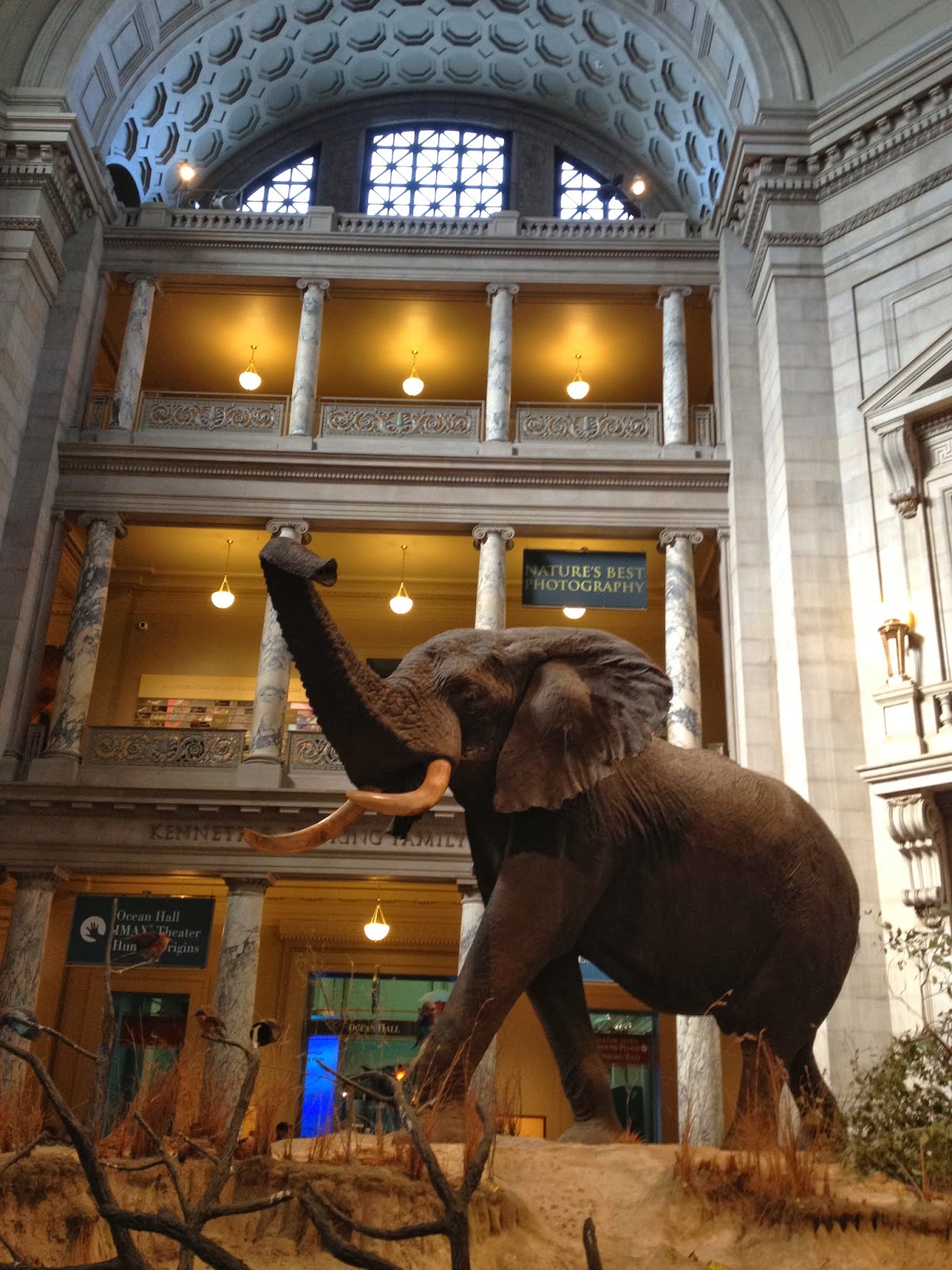
Wordless Wednesday: Natural History Museum

Wednesday, June 25, 2014

Natural History Museum in D.C.

More Wordless Wednesday here.
Photo by moi.